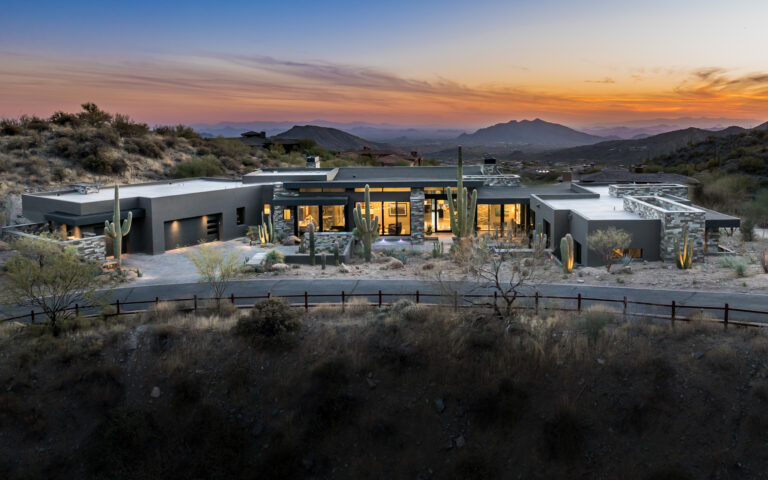
Architecture that listens to the desert rather than imposing upon it.
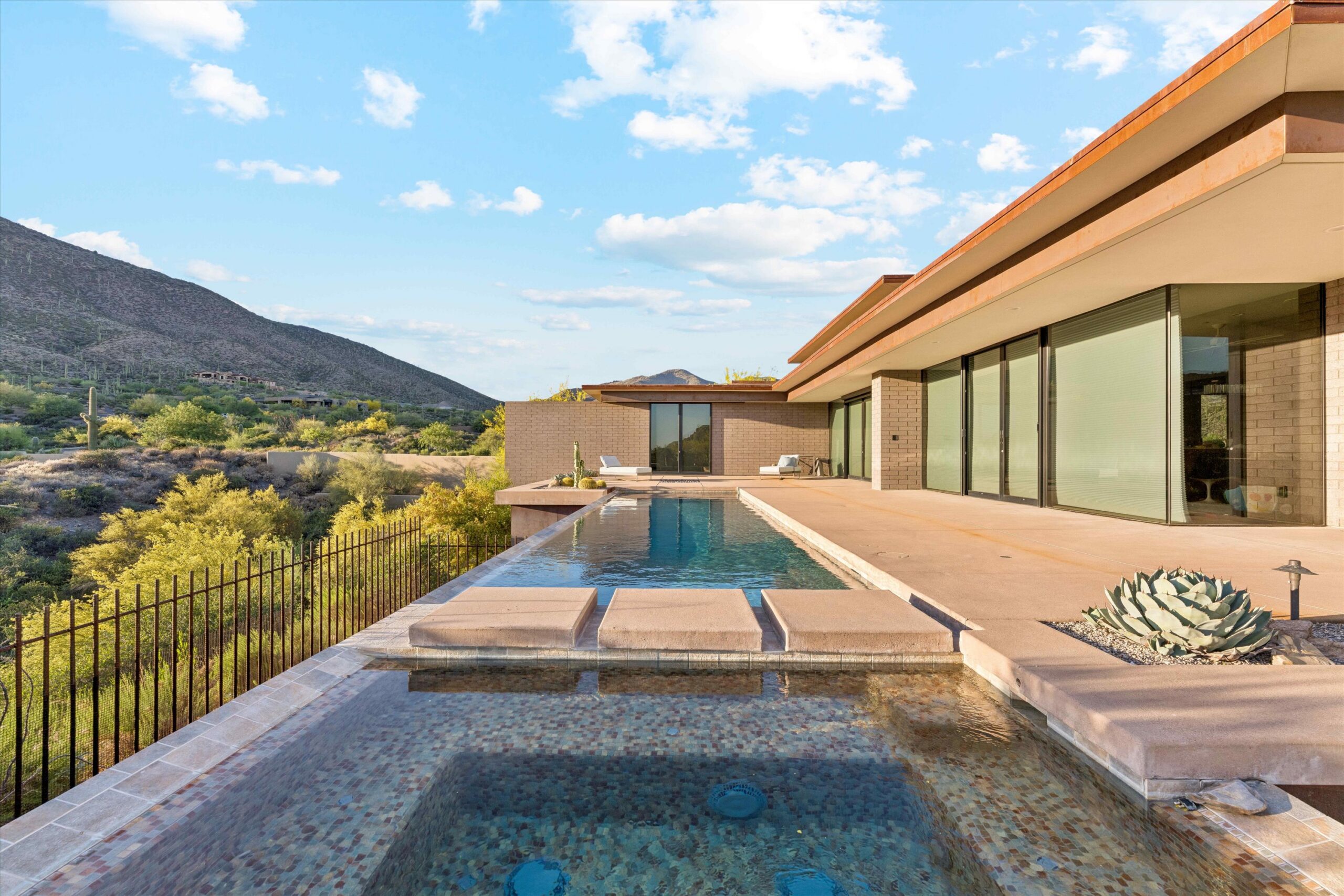
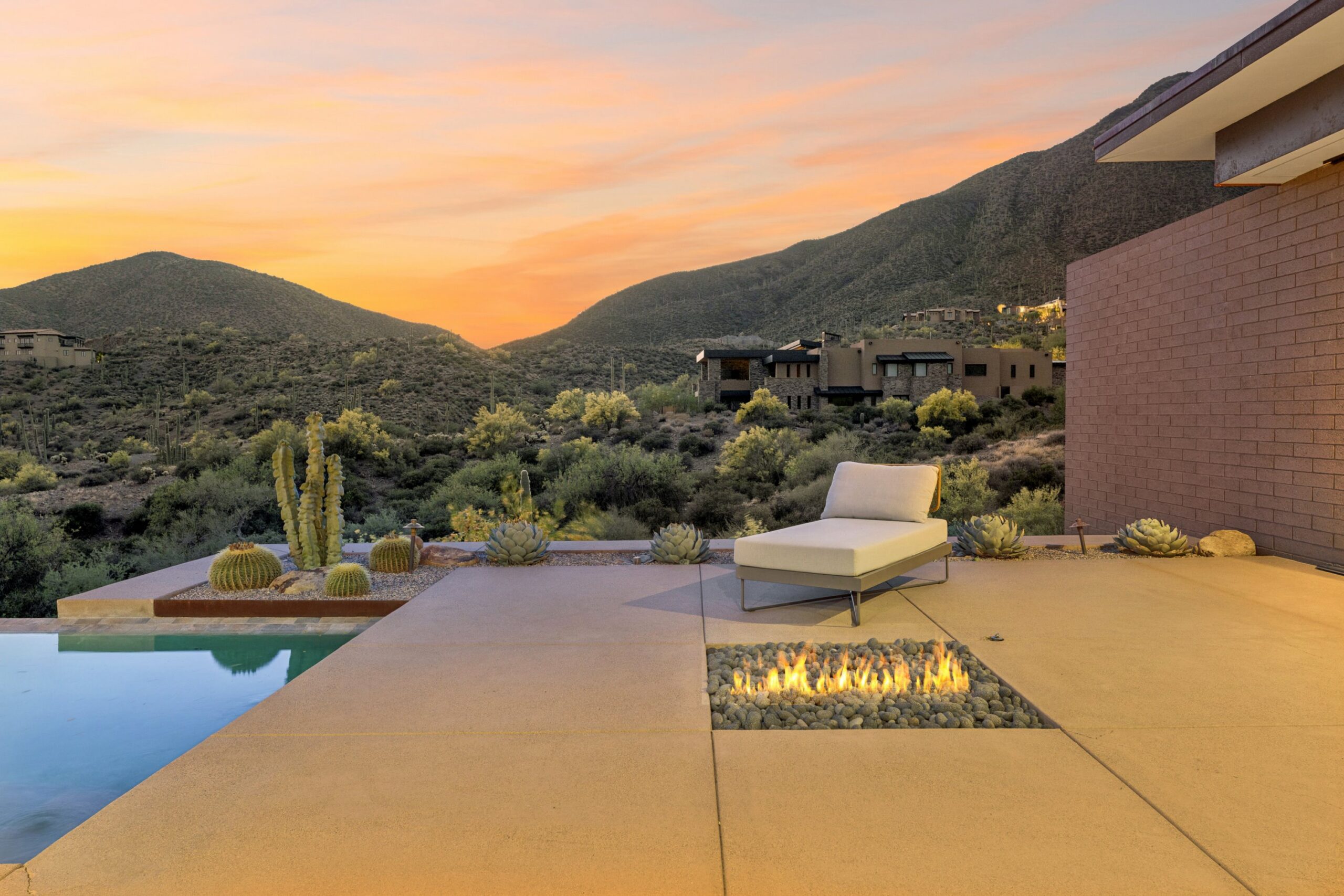
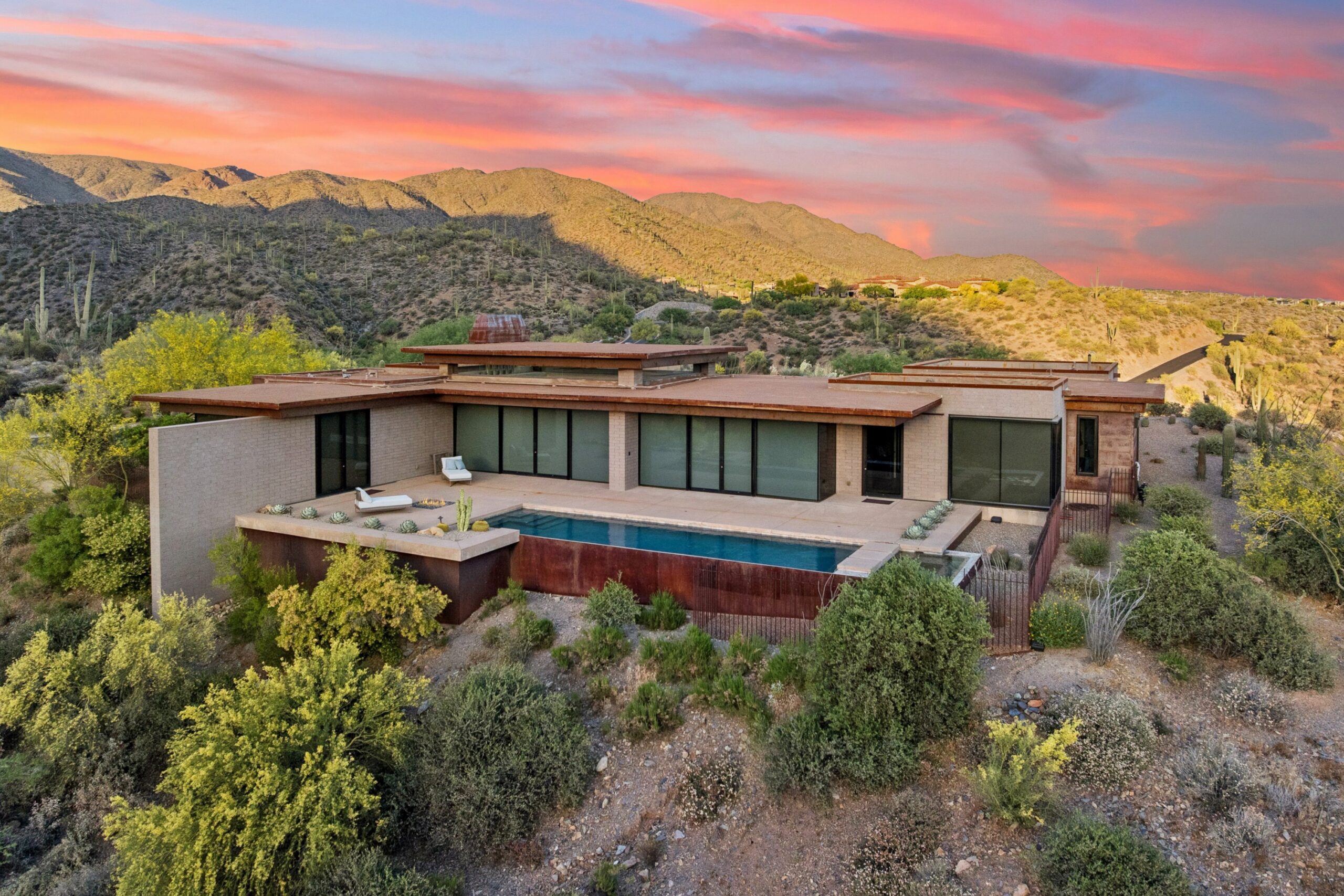
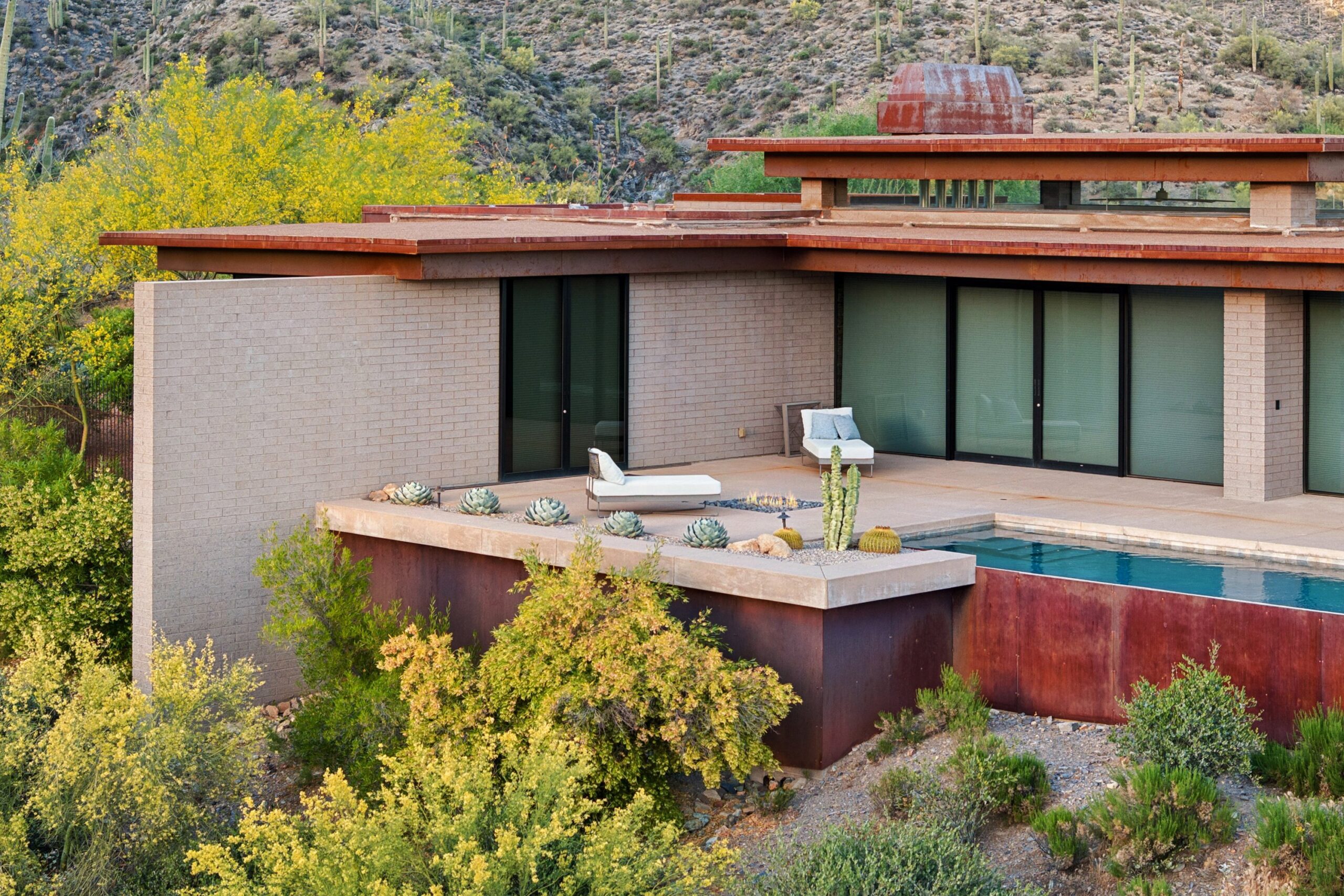
Tucked into a remote canyon at 3,500 feet, this home was designed to coexist with the landscape it calls home.
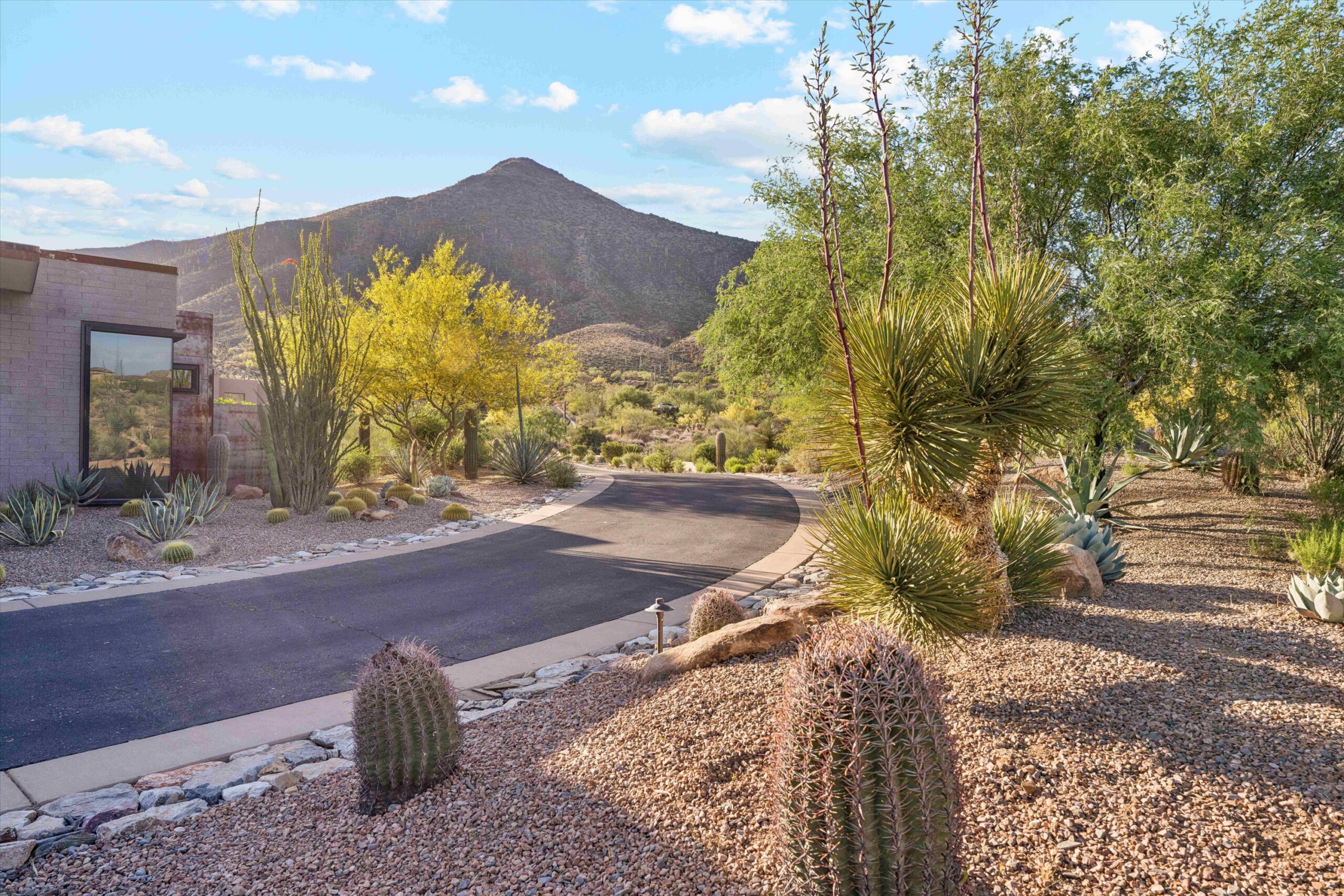
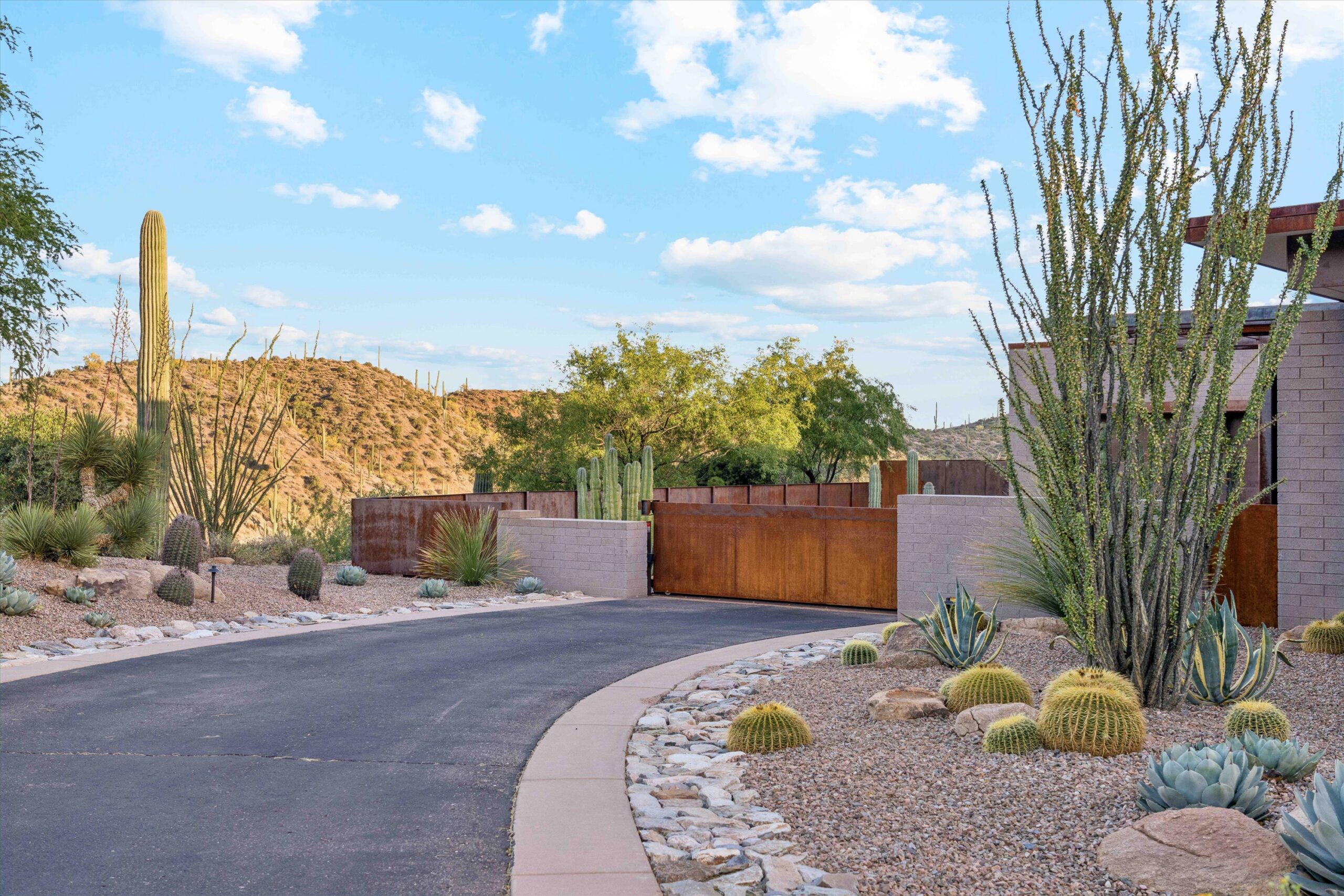
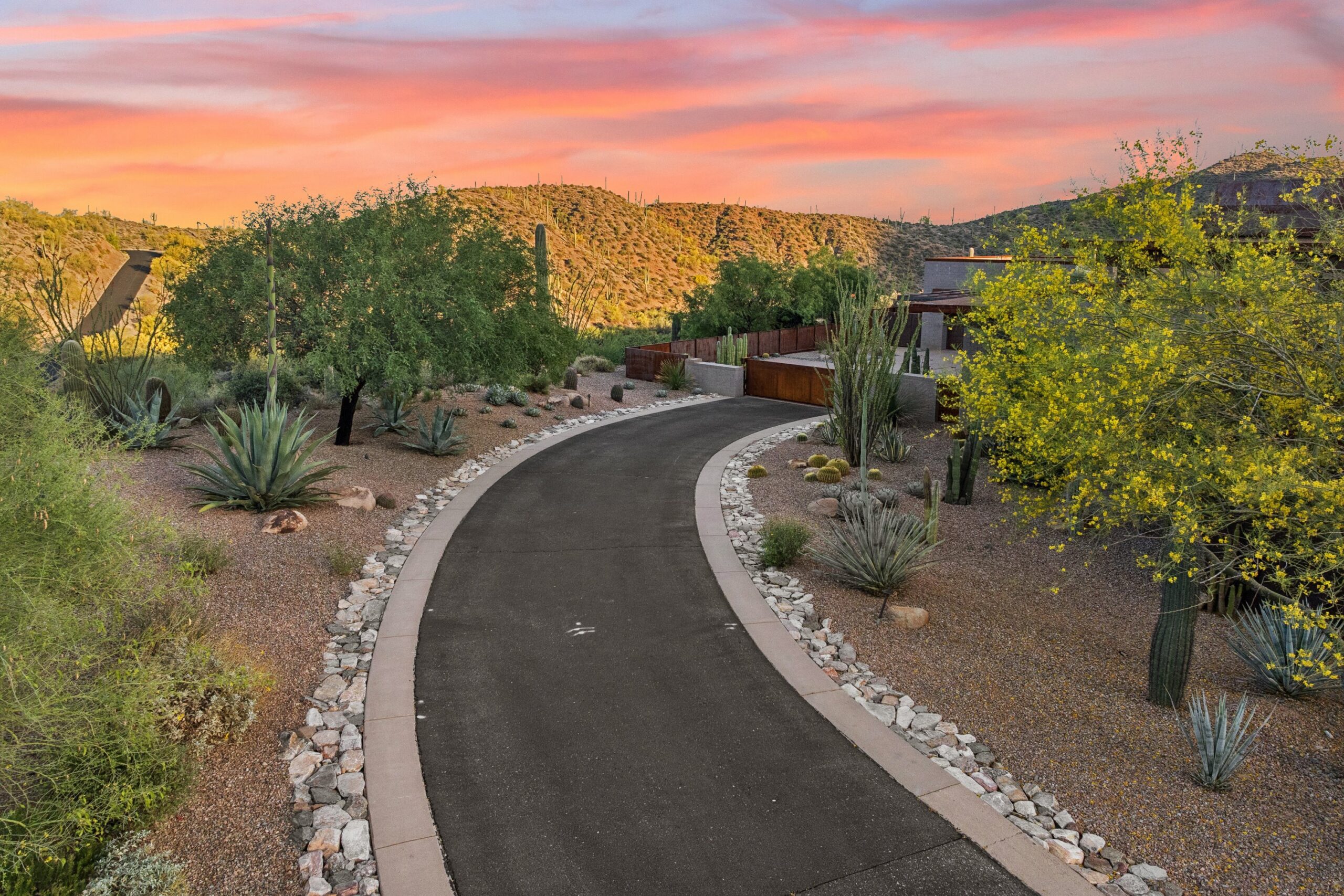
The road in is part of the story — switchbacks cut through steep canyon walls, the landscape growing wilder and more remote with every turn, until the home reveals itself, settled quietly into terrain that feels almost untouched by human hands.
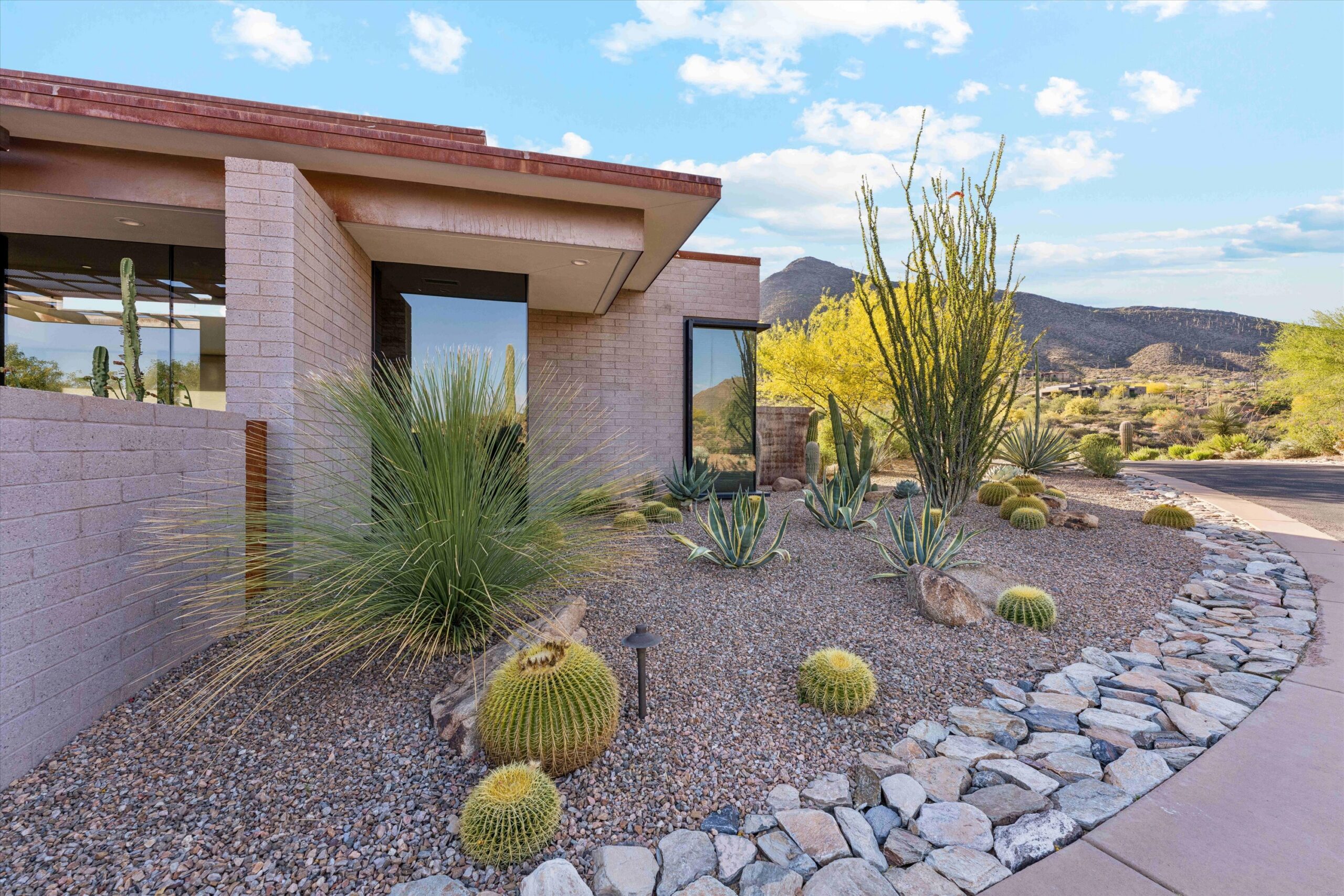
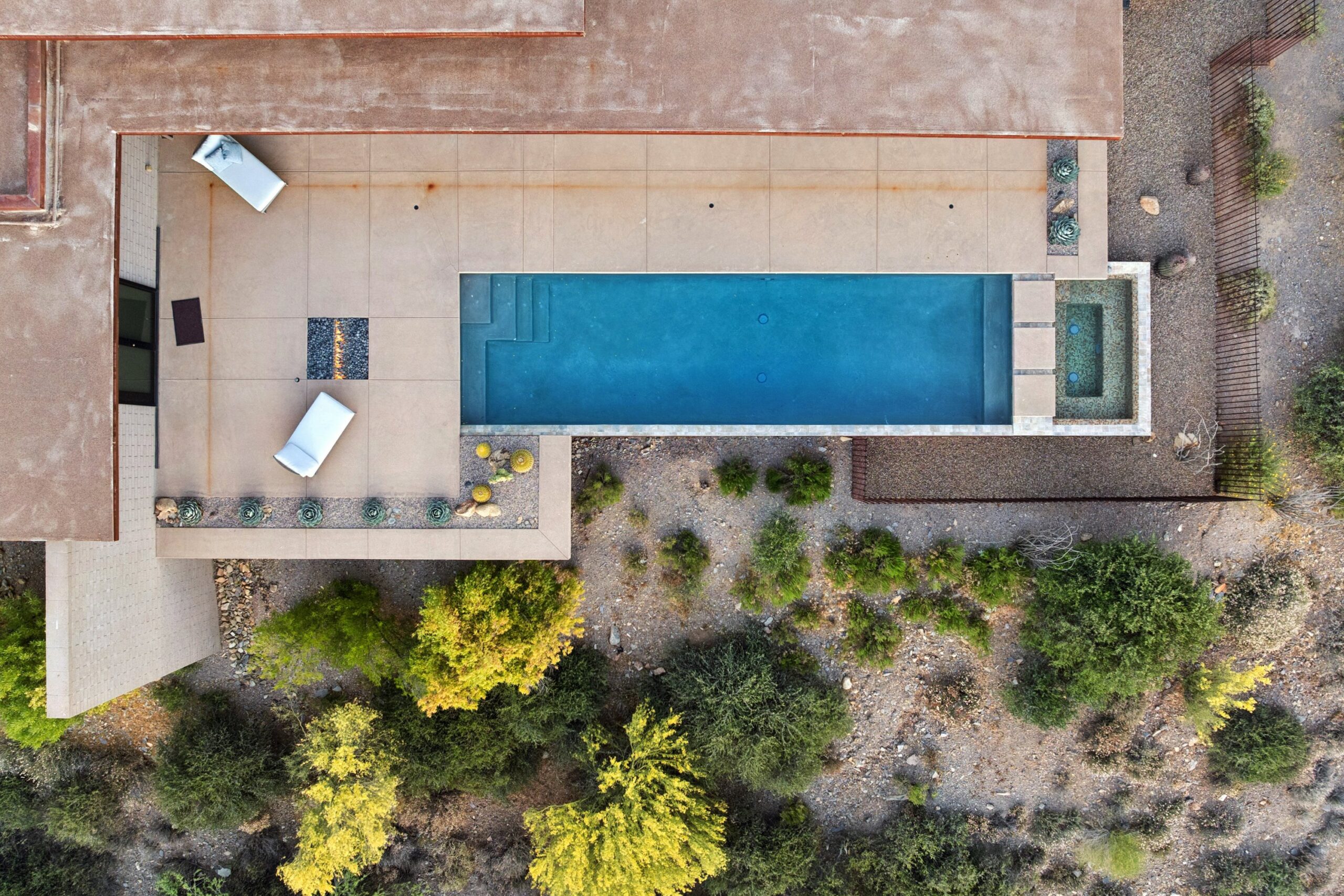
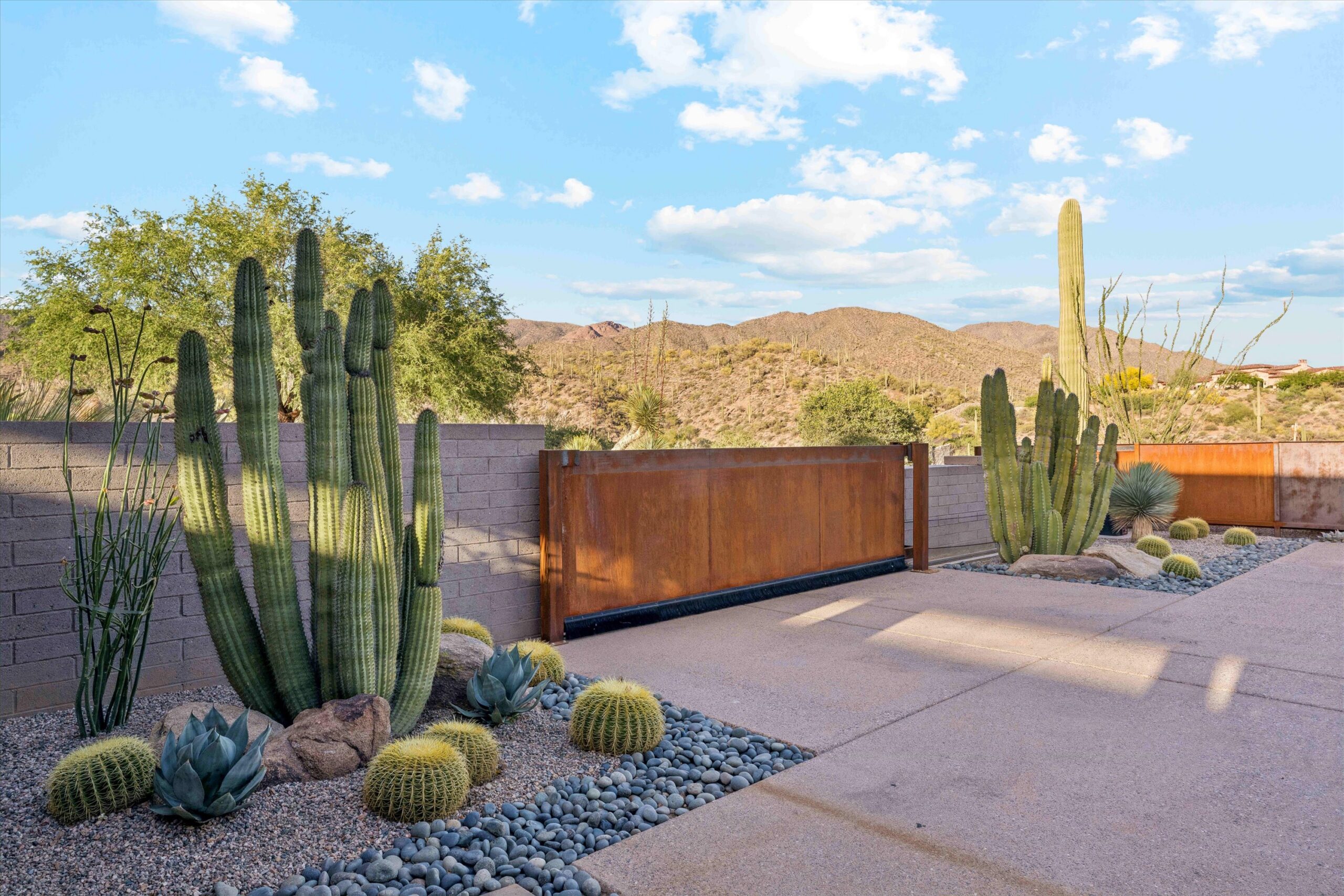
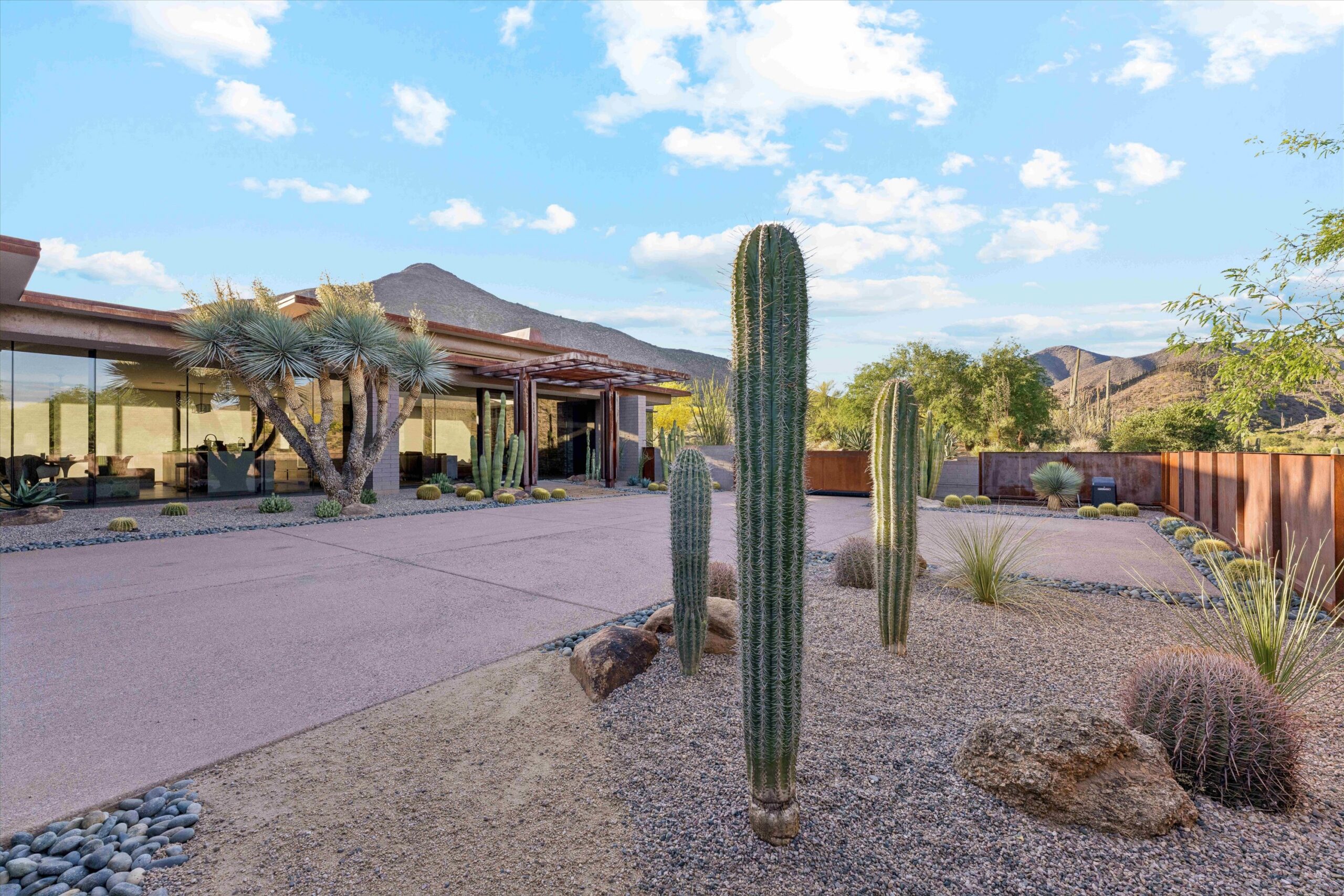
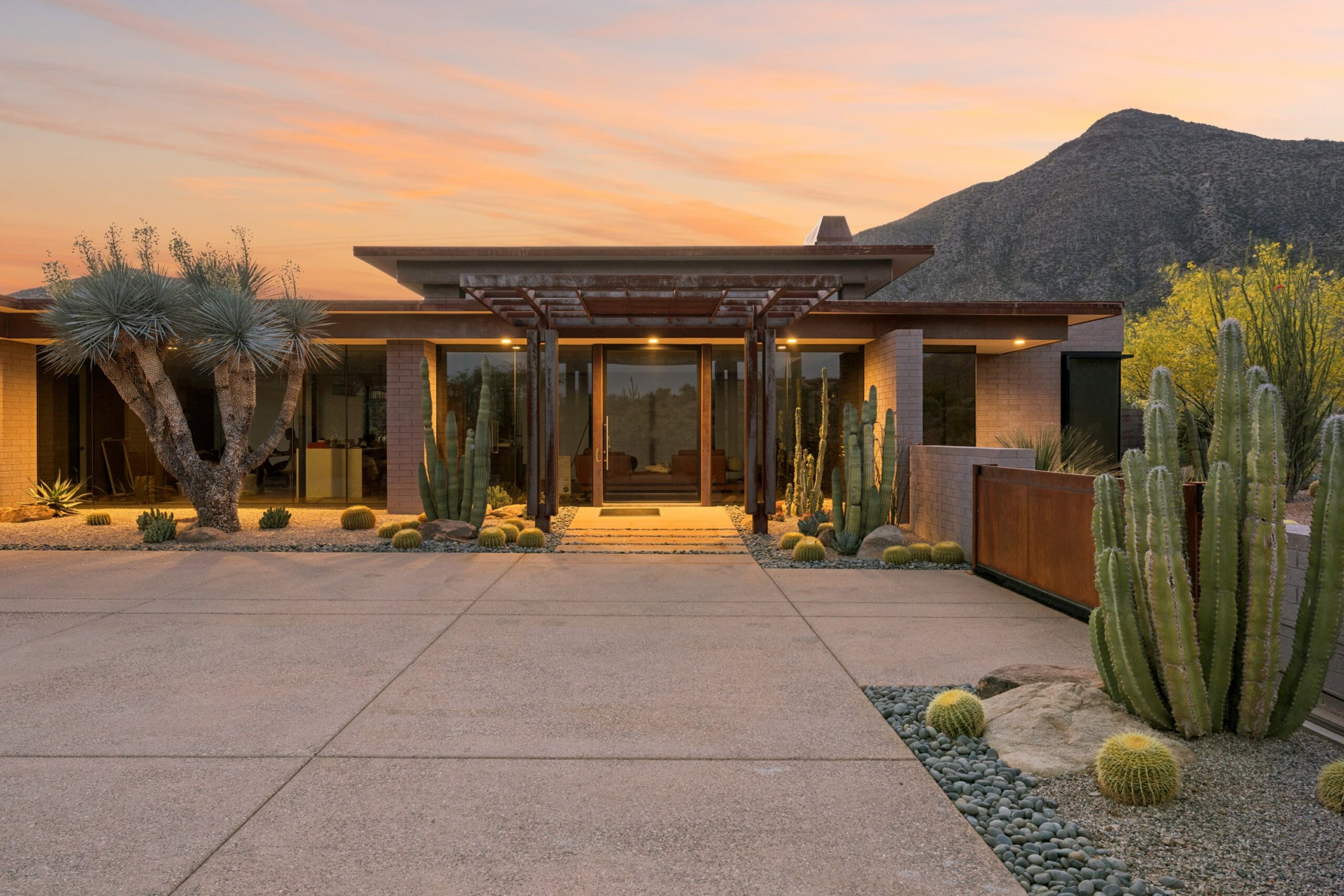
That sense of restraint was intentional. The home was sited to honor the land in its rawest form, letting the canyon’s natural contours, rock outcroppings, and washes remain exactly as they were. Irrigation was confined to a few small, enclosed garden pockets close to the house, while the rest of the property was left to thrive on what the desert already provides.
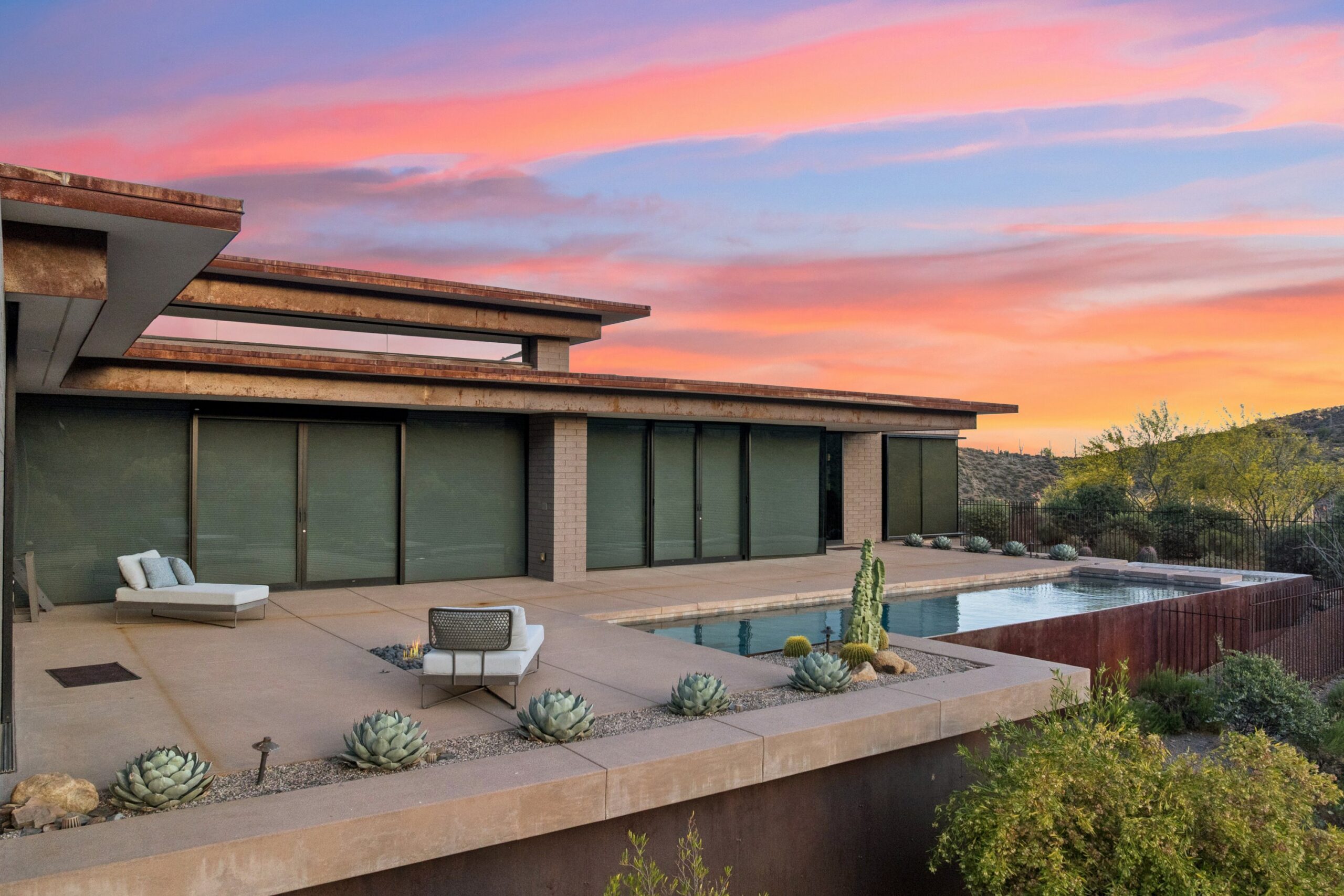
Native and select non-native cacti and succulents fill these spaces — sculptural, drought-tolerant, and nearly maintenance-free — while existing native vegetation was carefully preserved in place, minimizing disruption to the surrounding ecosystem.
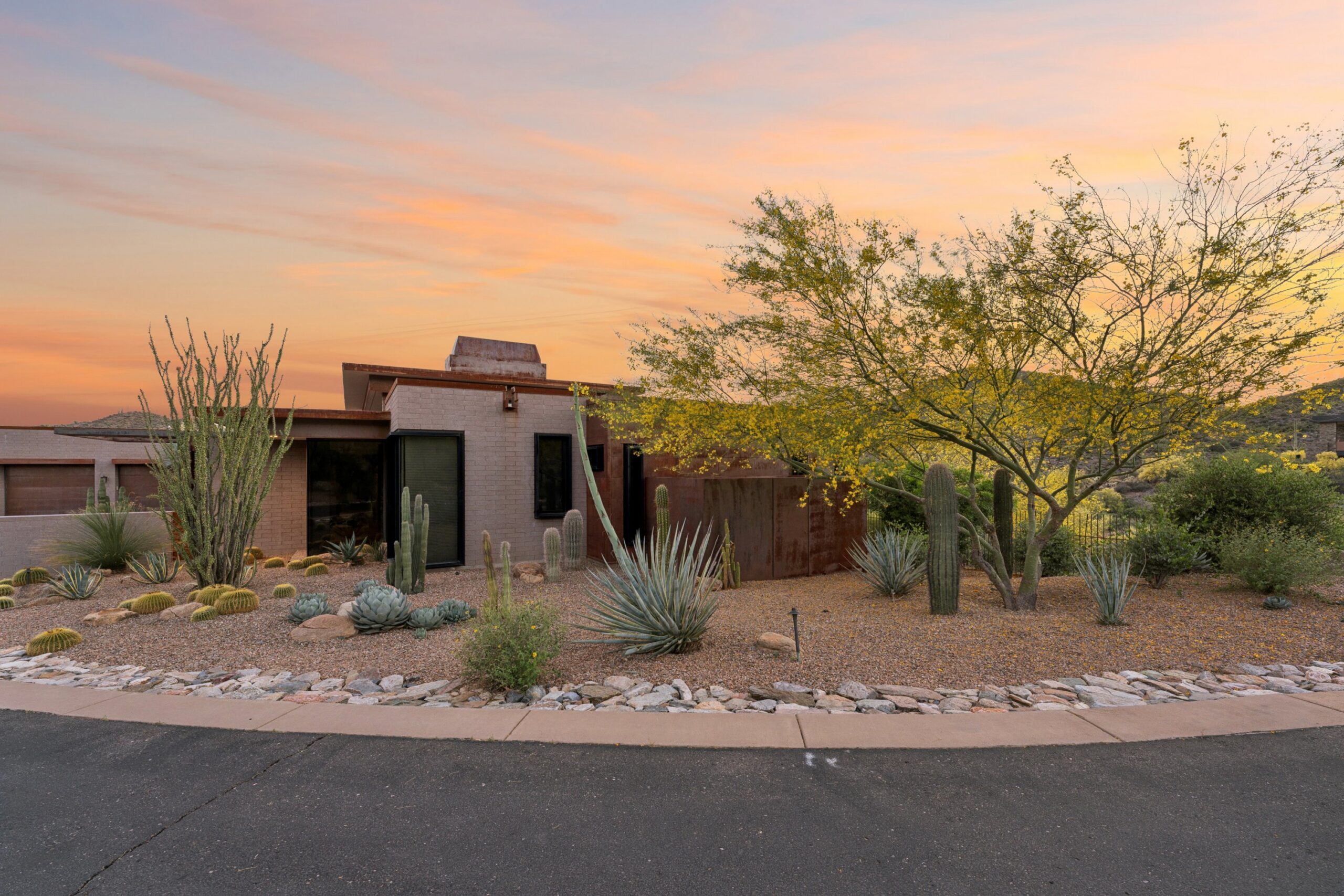
As dusk settles, the canyon grows quiet in a different way. Only a few soft path lights mark the way, just enough to navigate safely, leaving the rest of the landscape to fall into shadow. At 3,500 feet above the desert floor, with little ambient light to compete, the night sky opens up in full — a dense, uninterrupted field of stars that feels increasingly rare to witness.
If one word captures this project, it’s sustainability — not as a checklist, but as a guiding philosophy. Every decision, from the placement of the home to the plant palette to the lighting, was made in service of the land first. The result is architecture that doesn’t dominate the desert, but listens to it.